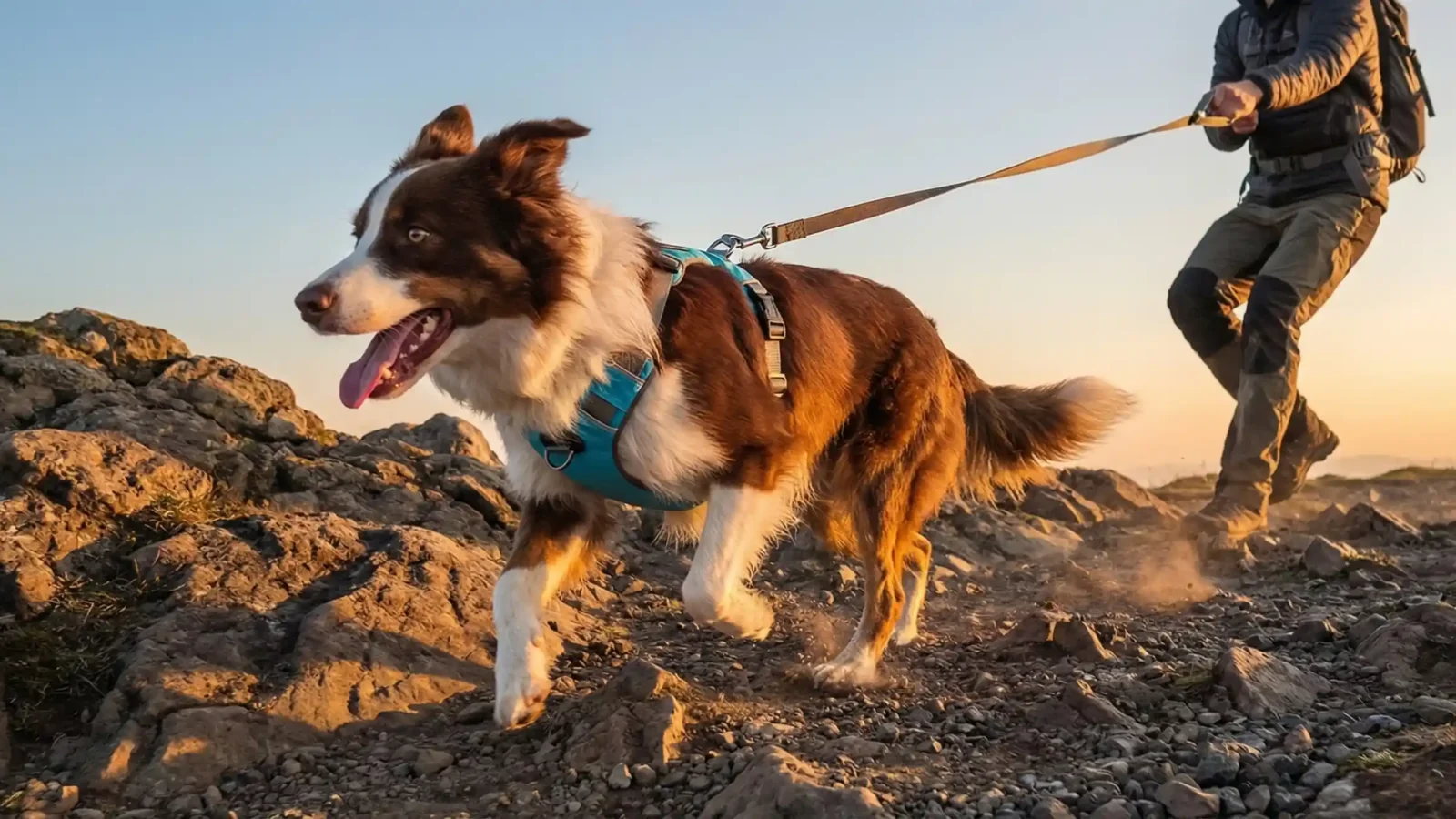
Quick answer: a successful first hike starts before you reach the trailhead. Choose a dog-friendly route, match the distance and terrain to your dog’s current ability, practice a few trail skills on ordinary walks, and pack for water, weather, cleanup, and close control.
Hiking can be a rewarding way to explore together, but it asks more of a dog than a neighborhood walk. New surfaces, wildlife, elevation, heat, other trail users, and longer time on leash all add distractions. This guide is a planning checklist, not a substitute for veterinary advice or local trail rules.
Start by checking whether the hike fits your dog
Look at the whole outing rather than a breed label. Consider your dog’s age, current conditioning, comfort around unfamiliar people and dogs, coat, and any history of mobility or breathing concerns. For a puppy, senior dog, or dog with a health concern, ask a veterinarian what activity is appropriate before increasing distance or difficulty.
Then check the route itself: are dogs allowed, are leashes required, is there reliable shade or water, and is the terrain manageable for the pair of you? The American Kennel Club recommends tailoring distance and terrain to the individual dog’s ability and building basic obedience before heading out. Their hiking guidance is a useful reference when you are deciding where to start.
Build distance and distractions gradually
Use ordinary walks to prepare. Begin with a calm, familiar route, then add a little more time, uneven ground, or a new environment one variable at a time. That makes it easier to notice what your dog handles well and what still needs practice.
For a first trail outing, choose an easy route with a clear turnaround point. Keep your plan flexible: turning back early is a good outcome if the weather changes, the trail is busier than expected, or your dog is not comfortable. Give your dog time to sniff and reset rather than treating the hike like a distance target.
Practice the trail skills that matter most
Loose-leash walking and pace changes
On uneven ground, pulling can put both of you off balance. Practice walking at your pace in a low-distraction environment first, then gradually add distractions. Simple pace cues such as “easy” and “let’s go” can help you communicate before the trail gets narrow or rocky.
Check in, wait, and recall
Your dog should be able to pause, look back to you, and move with you around other hikers, dogs, or trail obstacles. A dependable recall matters even where off-leash activity is allowed, but trail regulations and the situation in front of you should decide whether a leash stays on. Keep your dog leashed wherever rules require it or close management is needed.
Leave it and drop it
Trail edges can contain discarded food, animal waste, wildlife remains, plants, and other things you do not want your dog to eat. Practice “leave it” before an outing and use a reward your dog values when they choose to disengage. AKC’s guide also distinguishes “leave it” from “drop it,” which is useful when a dog already has an item in their mouth.
Pack a simple hiking-with-your-dog checklist
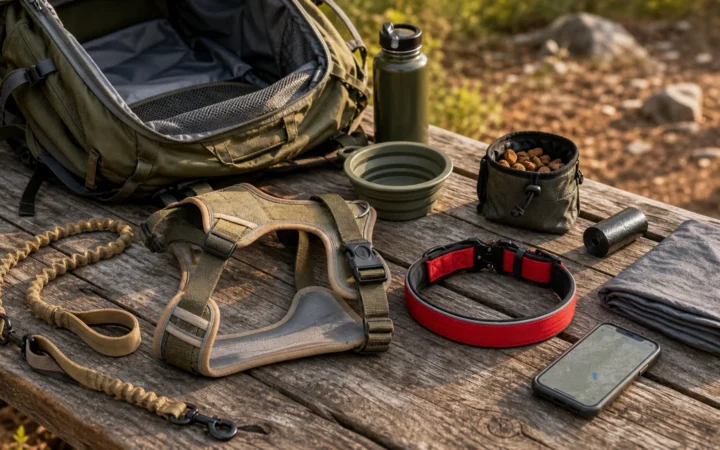
- Water and a portable bowl for your dog, plus enough for the expected conditions.
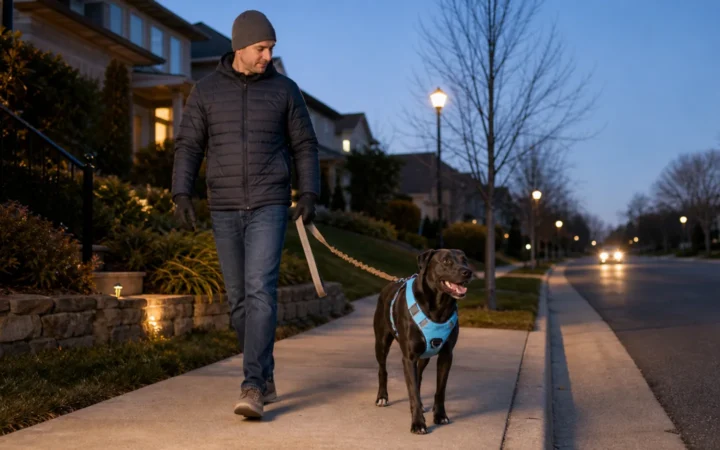
- A leash that matches the route rules and gives you controlled handling around people, wildlife, and trail edges.
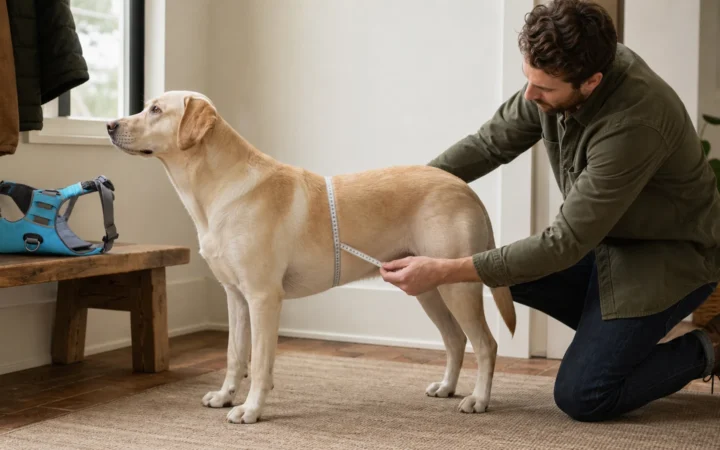
- A well-fitted harness or collar with current identification.
- Waste bags and a way to carry used bags out.
- High-value treats for training, a basic first-aid plan, and a charged phone with the route information saved.
- Weather-appropriate layers or protection when conditions call for them.
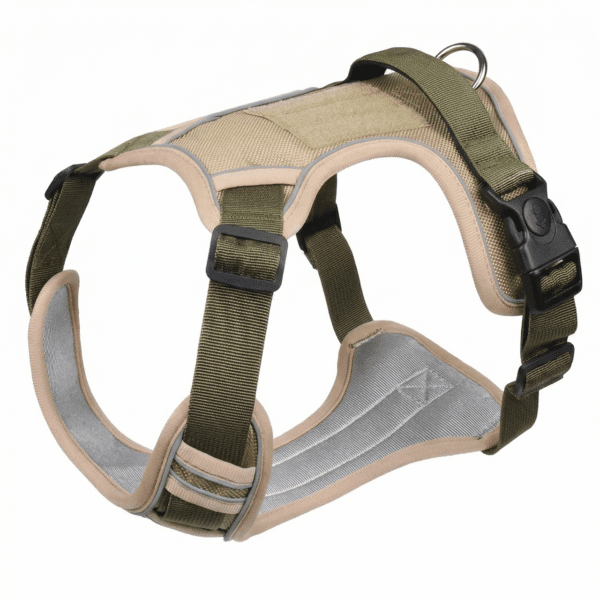
Choose equipment for fit and handling, not as a replacement for training. For example, the Mydoggg 1680D Tactical No-Pull Dog Harness with Handle has a front leash point, a top handle for close transitions, padded contact areas, reflective trim, and four-point adjustment. Those details can support more deliberate handling on a walk; they do not promise to eliminate pulling. You can also browse Mydoggg dog harnesses to compare the available fits and features.
Use trail etiquette to protect your dog, other people, and the place you are visiting
Read the posted rules before you set out. Many trails require leashes to reduce conflicts with wildlife and other visitors. Step aside when needed, keep the leash short enough for passing safely, and do not assume every person or dog wants an interaction. Pack out waste and do not let your dog disturb wildlife or sensitive areas.
REI’s hiking-with-dogs checklist is another useful planning resource for route rules, hydration, wildlife, and trail etiquette. Local land managers remain the source of truth for the specific trail you choose.
Know when to pause or turn back
Pay attention to your dog throughout the outing. Heat, rough surfaces, fatigue, and stress can build quickly outside. Slow down or turn back if your dog seems reluctant to continue, has trouble keeping pace, appears overheated, starts limping, or cannot settle after a break. When you get home, check paws, coat, and gear contact points, then make the next outing easier or harder only after you have seen how your dog recovered.
Plan your first hike around a good ending
The goal of a first hike is not a record distance. It is a calm, safe experience that gives you useful information for the next one. Pick a route you can leave easily, bring more water and patience than you think you need, and finish while your dog is still comfortable. With steady training and sensible preparation, the trail can become another place where you and your dog move with confidence.