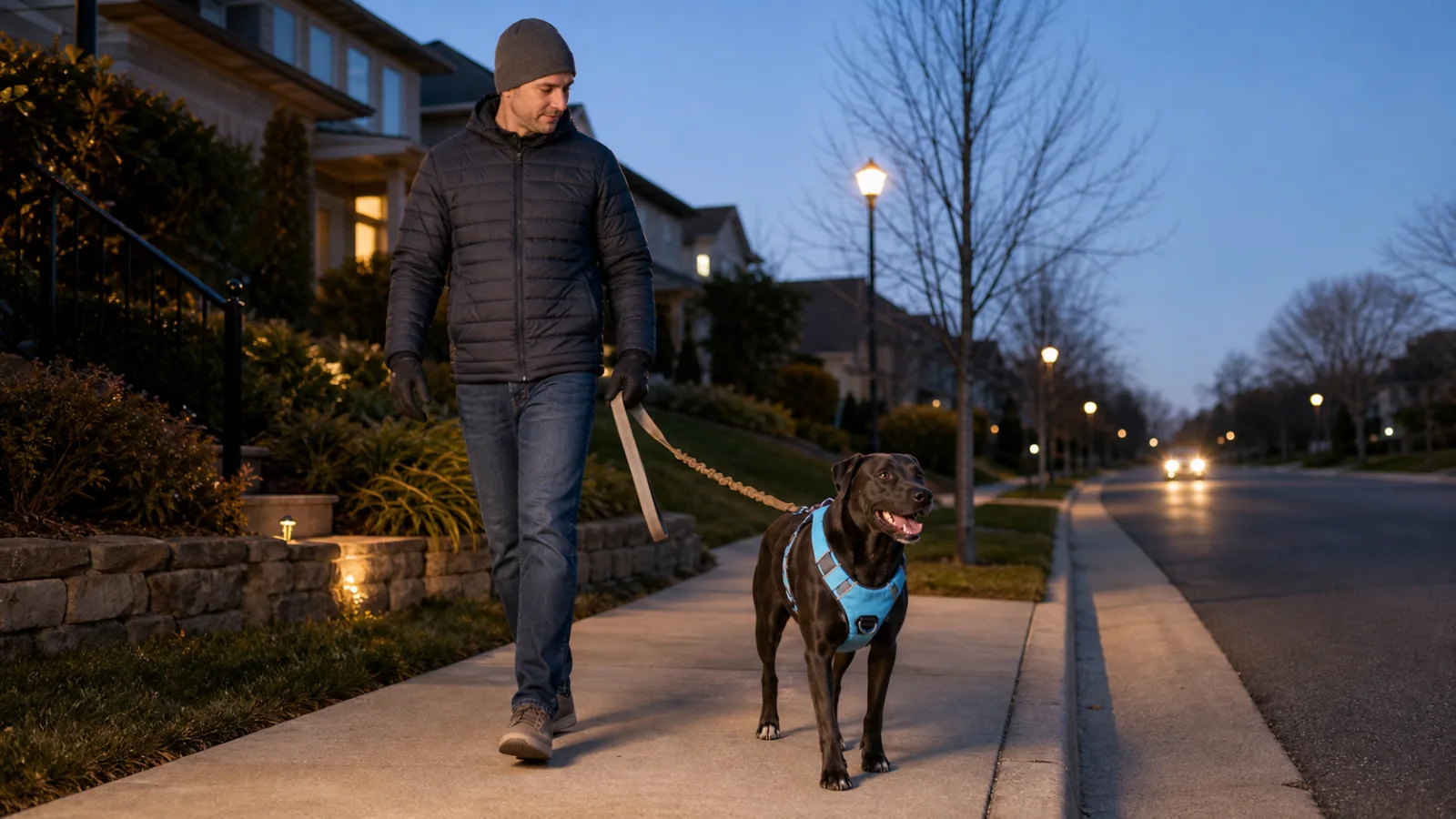
Reflective material is not a light. It becomes noticeable when a headlight, bike light, or streetlight reaches it. That is why a thin reflective collar, a harness with reflective trim, a reflective leash, and something visible on the handler all do different jobs.
Quick answer: plan a night walk in this order: choose a known, well-lit route; use a leash length you can shorten before the curb; then add visibility across the dog, leash, and handler. Reflective gear is one layer of the plan, not the whole plan.
The guidance below is for ordinary neighborhood and roadside walks. Follow local pedestrian rules and respond to the route conditions in front of you.
Start with the route, not a shopping list
A shorter familiar loop is usually easier to manage than a longer route with blind driveways, broken lighting, or a narrow shoulder. Before dark, look for:
- Working streetlights and continuous sidewalks
- Crossings with a clear view in both directions
- Driveways, parking-lot exits, and corners where a vehicle or bike can appear late
- A simple turnaround point if your dog becomes overstimulated
The U.S. National Highway Traffic Safety Administration recommends using sidewalks where available, crossing at intersections or crosswalks, and—when there is no sidewalk—facing traffic and staying as far from it as possible. Read the current NHTSA pedestrian guidance; local rules still take priority.
For a strong puller, a familiar lit block is a better training environment than an ambitious dark route. The first goal is not distance. It is keeping enough time and space to make the next decision calmly.
Make the dog–leash–handler line easier to read
Retroreflective material returns incoming light toward its source, so it is most noticeable to someone near that light source. It still needs light to work. A reflective strip does not illuminate an unlit path, and the angle, placement, wear, and obstruction all affect what another road user may see.
Think in three layers.
On the dog
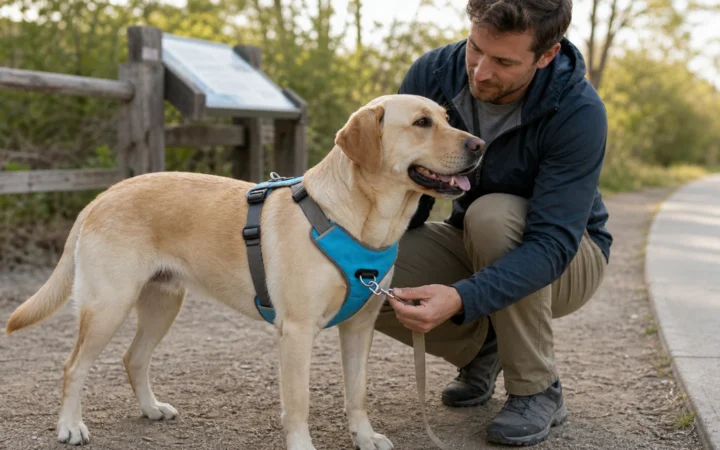
Use reflective piping or webbing on a well-fitted collar or harness. A harness covers more of the body than a collar, while a collar remains useful for current identification. If you add a clip-on light, place it where it will not swing into the dog’s eyes or tangle with the leash.
Along the leash
Reflective leash webbing can make the connection between dog and handler easier to read. It also gives you a chance to notice whether the leash disappears against the road or landscaping on your normal route.
On the handler
Add a visible or reflective element to your jacket, shoes, or bag, and carry a light when the route itself is dark. A phone flashlight is useful as a backup, but it is awkward as the only regular lighting plan when the other hand is managing a dog.
What the current Mydoggg gear actually changes
The useful comparison is not simply “reflective” versus “not reflective.” Look at where the reflective area sits and what handling option comes with it.
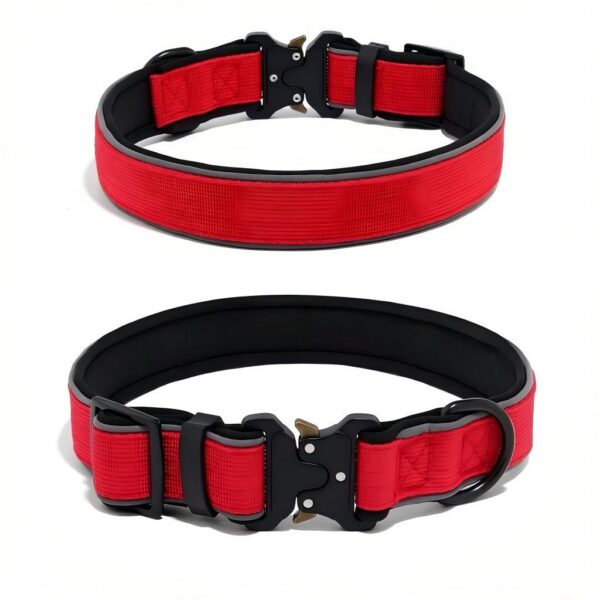
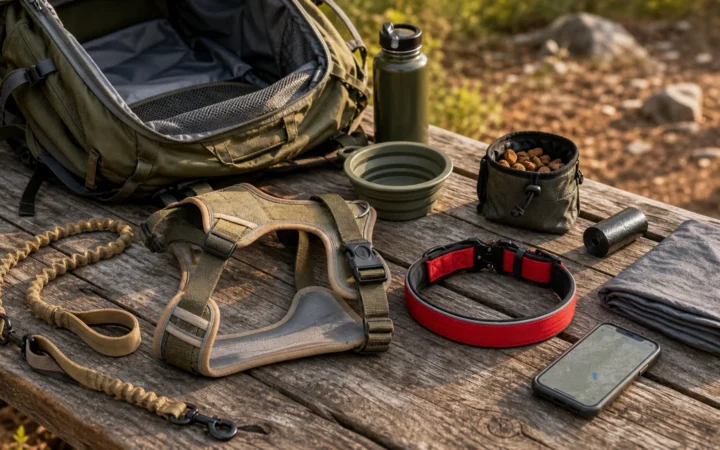
- Adjustable Reflective Outdoor Dog Collar: reflective tubing follows the collar, creating a narrow moving outline at the neck. Its SBR neoprene padding and adjustable fit make it primarily a collar and ID layer.
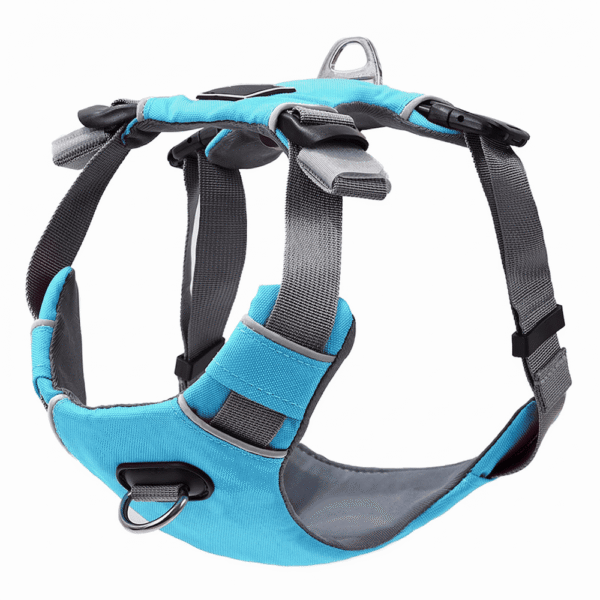
- No-Pull EVA Padded Adventure Harness: reflective trim sits across a larger body area. It also provides front and back leash points with an EVA-padded chest panel.
- 1680D Tactical No-Pull Dog Harness with Handle: reflective trim outlines the harness. A padded top handle and four adjustment points add options for fit and brief close-control transitions.
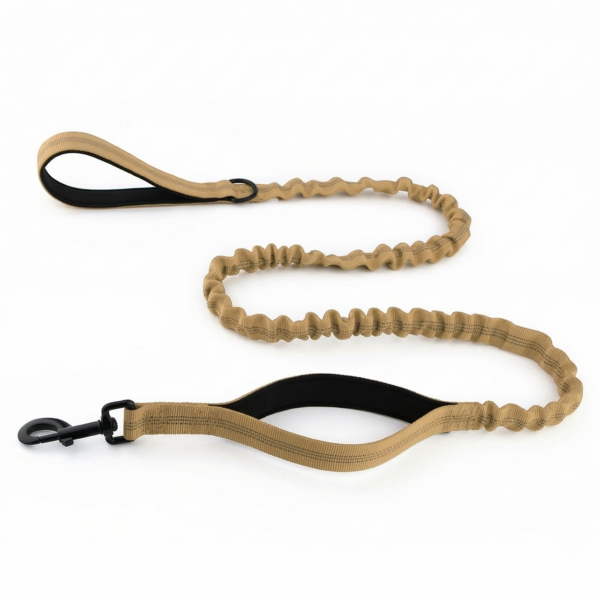
- Shock-Absorbing Dual Handle Dog Leash: reflective webbing runs along the leash. The bungee section and two padded grips provide a normal walking position and a closer grip for crossings or crowded sections.
Those are current product-page specifications, not measured visibility distances or a promise that a driver will see the dog. Reflective performance depends on an outside light source and the real viewing conditions.
Shorten the available distance before the curb
Visibility without control is incomplete. Keep enough leash for a normal walk, but not so much that a sudden lunge can reach the road before you feel it. Gather or shorten the leash while you are still behind the curb, rather than reacting after the dog has stepped forward.
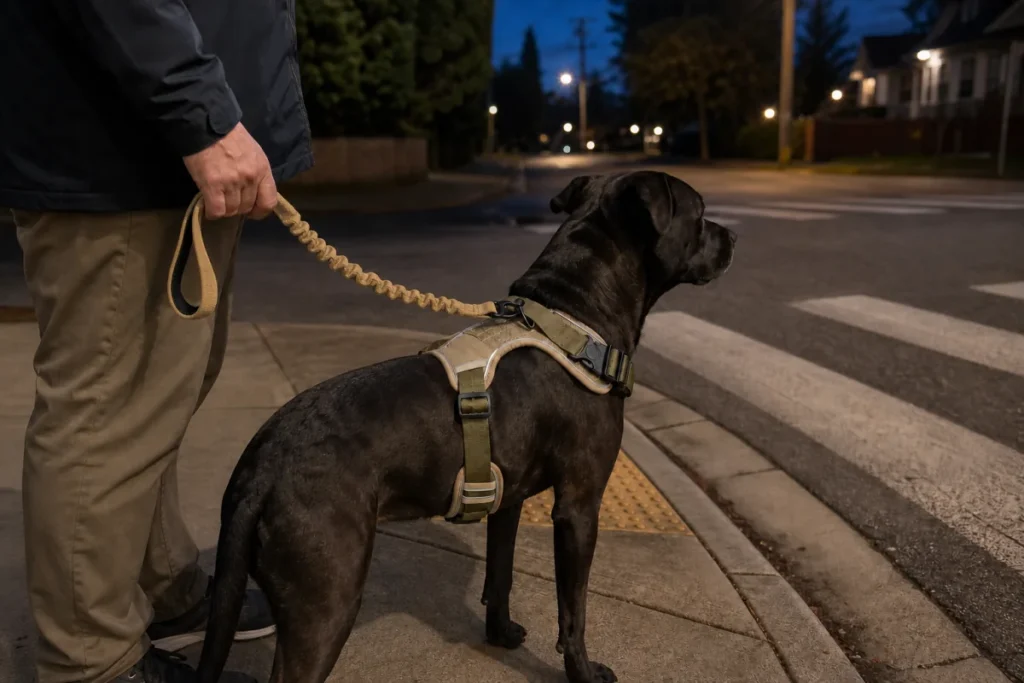
A second grip near the dog can help with short transitions. If the harness has a top handle, use it only for a brief close hold when needed—not as constant steering.
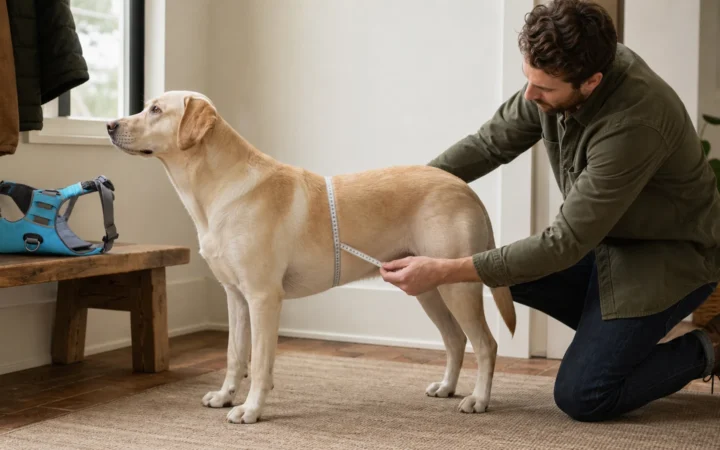
Many handlers attach the leash to a properly fitted harness and keep a collar for identification. Whichever setup you choose, check the fit in daylight. A harness that rotates, rubs, or leaves too much room is harder to correct when you cannot clearly see every strap and buckle.
Habits matter more than another accessory
- Pause before every curb and driveway; look for a complete stop rather than assuming a driver has seen you.
- Use predictable crossings and keep scanning while you cross.
- Skip headphones, or keep one ear free at low volume.
- Practice a calm “wait” and a move-on cue in daylight before relying on them at night.
- If your dog reacts to a sound, animal, or vehicle, create distance instead of testing how close you can pass.
- Shorten the outing when the dog is freezing, panicking, or unable to settle. More exposure is not always better training.
What reflection changes—and what it does not
Reflective gear can add moving outlines to the dog, leash, and handler and return some incoming light toward its source. It is a passive visibility layer that works without a battery.
It cannot stop a dog from pulling, replace a light on a pitch-black roadside, correct a poor fit, or guarantee that another road user is attentive. It also does not replace current ID tags and a recovery plan if the dog gets loose.
If you become separated after dark
- Keep the dog’s tags current and readable.
- Save a recent phone photo and microchip information where you can reach them quickly.
- Know where the harness handle or secure grab point is before someone needs to help.
- Avoid turning a frightened dog’s flight into a chase near an open road. Use calm call-outs and block safer exits when possible.
A practical setup for a strong puller
- Reflective collar with current identification
- Properly fitted harness with reflective trim, with the leash attached to the chosen harness point
- Dual-handle or easily shortened leash
- A visible element and light on the handler
- A familiar lit route that is shorter than the dog’s maximum daytime walk
This setup does not make pulling disappear. It gives the handler more visible area, more handling choices, and fewer surprises to manage at once.
Night-walk questions people ask
Is reflective gear enough for night walks?
No. It is one layer alongside route choice, leash control, handler visibility, and attention.
Should I use a retractable leash at night?
Near roads, a fixed-length leash gives you a more predictable maximum distance. That predictability matters more when a dog is strong or reactive.
Does a black dog need more than a reflective collar?
A narrow collar can be hard to read as the whole outline of a dark-coated dog. Reflective areas on the harness and leash, plus a visible handler, create more points of reference.
Can a no-pull harness keep a dog out of the street?
No harness can make that decision for you. Different attachment points and handling features may help manage direction, but leash length, timing, training, and attention still do the work.
Can I use the same setup for a full night trail?
A technical night trail adds navigation, footing, wildlife, and local-rule questions that a neighborhood loop does not. Unless both handler and dog already have those skills, start with a familiar route rather than treating reflective gear as permission to add difficulty.
Audit one ordinary evening walk before buying anything
Walk your regular route once with three questions in mind: where does the lighting disappear, how much leash can reach the curb, and which parts of the dog–leash–handler line catch light? Fix the weakest layer first.
If equipment is the gap, compare Mydoggg collars, harnesses, and leashes by reflective placement, fit, and handling options—not by the word “reflective” alone.